Jain Temples Associated with Gurudev Ramchandra Suriji Maharaj
Year of Establishment: Ancient
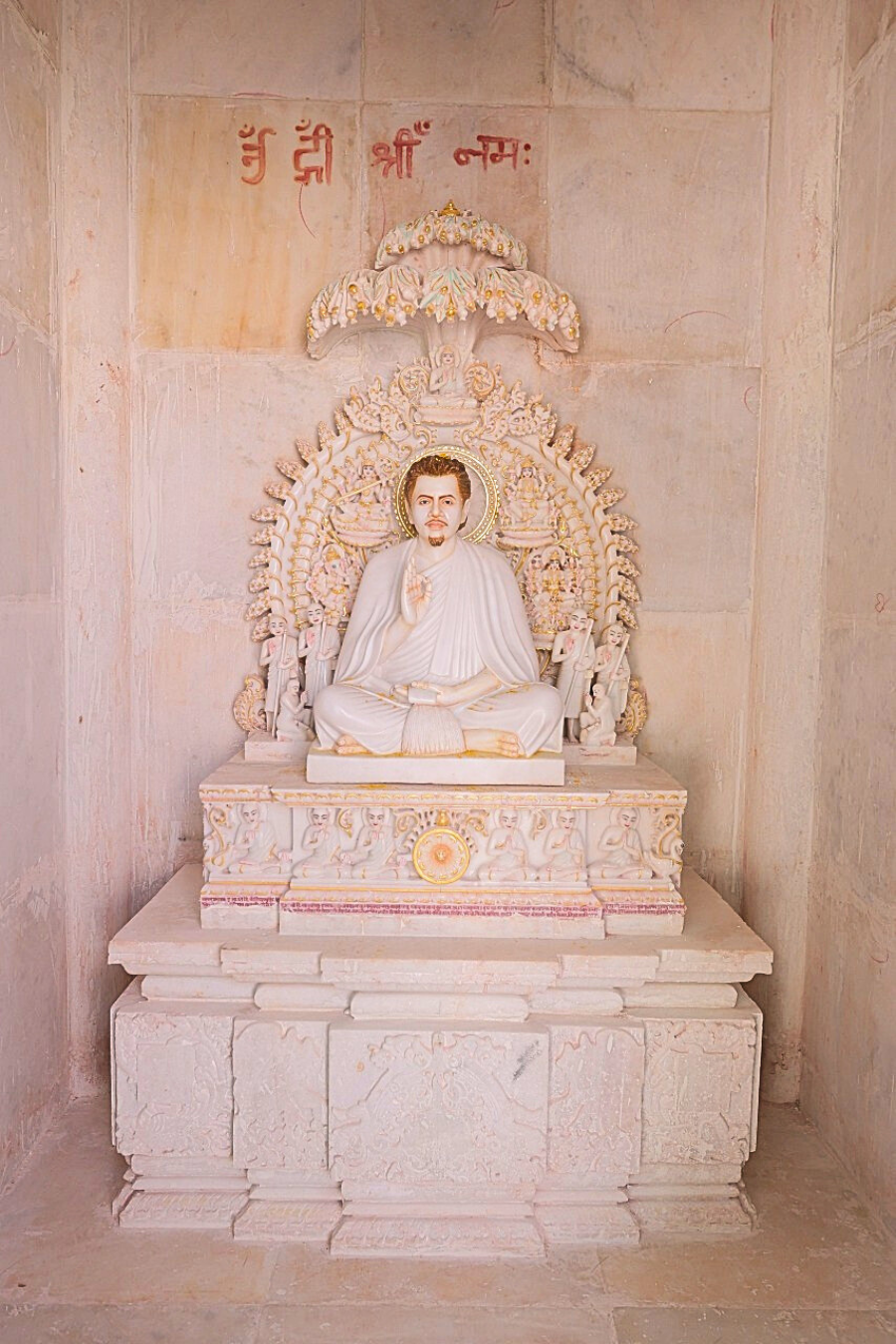
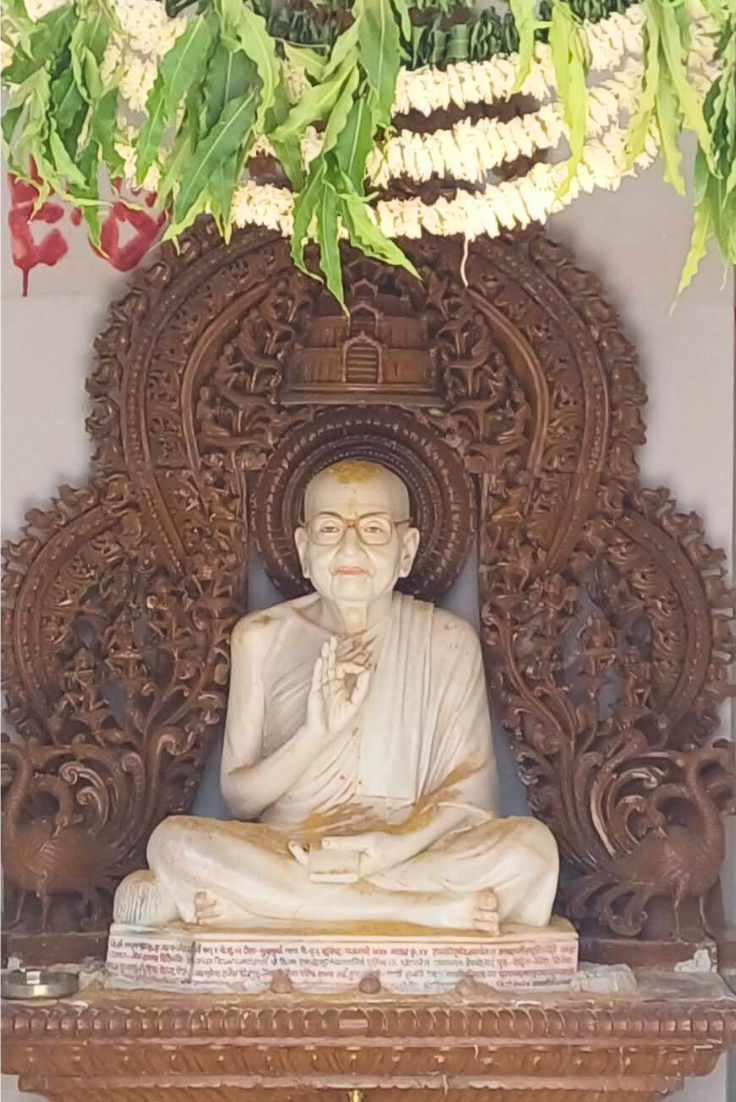
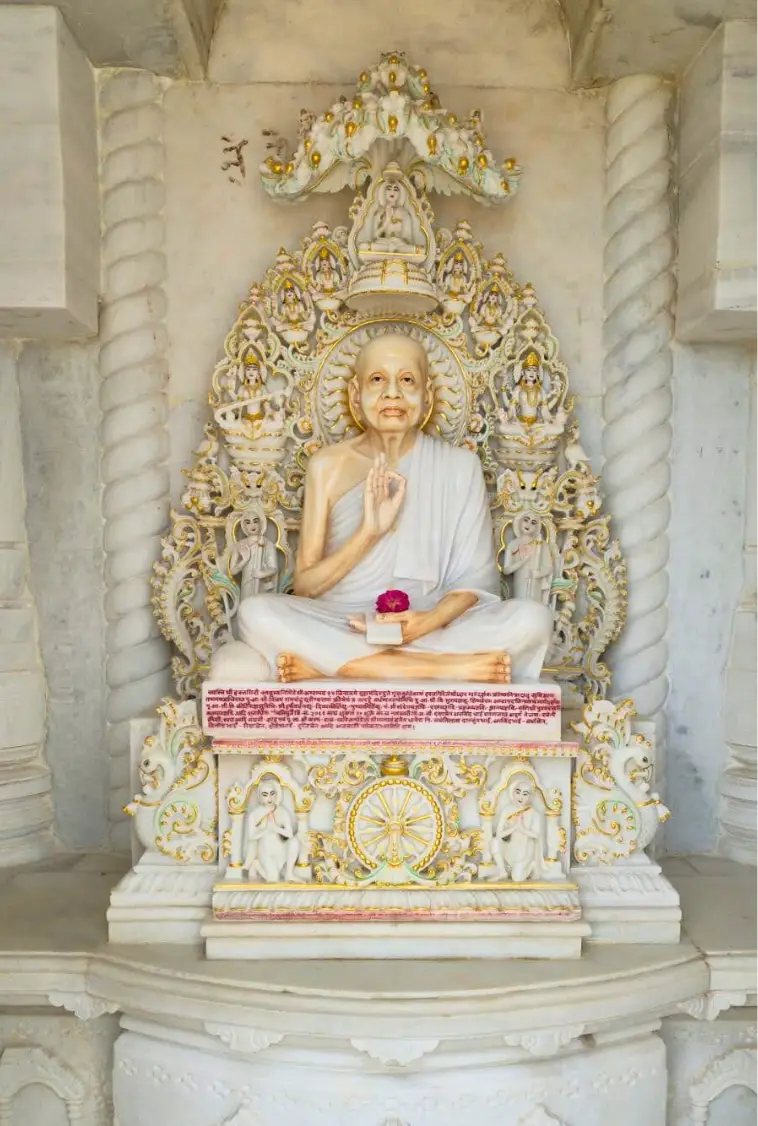
Temple in Honour of Gurudev
Dehwan Tirth – Birthplace of Gurudev
Where the Spiritual Journey Began
Dehwan Tirth in Gujarat is the sacred birthplace of Acharya Vijay Ramchandrasuriji Maharaj, where his divine journey began on Tuesday, 3rd march 1896 at 10:35 pm. This humble village nurtured the soul that would one day ignite a spiritual revival. Today, a serene temple marks this holy spot, inviting devotees to honor the roots of Gurudev’s luminous path. Pilgrims visit to seek blessings and reflect on the purity and purpose with which his life began.
Year of Establishment: Ancient (spiritual karm bhumi)
Temple in Honour of Gurudev
Padra Tirth – Karm Bhumi of Gurudev (Jain Mandir)
Where Teachings Blossomed
Padra, Gujarat, served as Gurudev Ramchandrasuriji’s karm bhumi—a place where his, He nurtured a spiritual ecosystem of learning, devotion, and initiation. Pilgrims revere this town as a living archive of his work, where his words and actions transformed countless lives and shaped the future of Jain dharma.
Year of Establishment: Ancient; Gurudev's Diksha in 1912
Temple in Honour of Gurudev
Gandhaar Tirth – Diksha Bhumi
The Ground of Renunciation
Located in Gandhar, Gujarat, Gandhaar Tirth is where Gurudev took his sacred vows of monkhood at the age of 17 in 1912. As his Diksha Bhumi, this site holds profound spiritual energy. Home to the revered Amizara Parshwanath idol, this coastal tirth is both ancient and serene. For followers, it marks the turning point where a young seeker embraced a lifelong commitment to Jain asceticism.
Sinor Tirth, located on the banks of the sacred Narmada near Vadodara, is revered as the place where Acharya Vijay Ramchandrasuriji Maharaj delivered his very first pravachan. The historic Temple of shri Vasupujya Swami, stands as a beacon of devotion and heritage. This holy site marks the beginning of Gurudev’s spiritual service, where his words first inspired countless souls. Pilgrims visit Sinor Tirth to seek blessings, immerse in devotion, and connect with the legacy of Gurudev’s profound teachings.
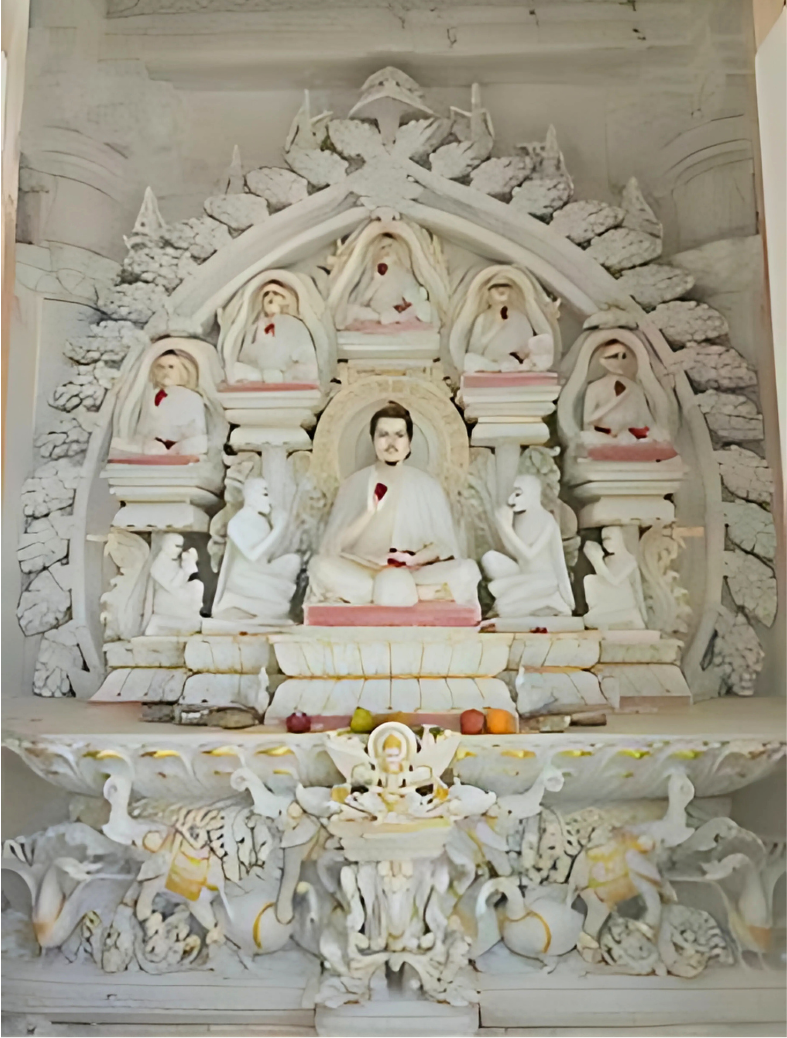
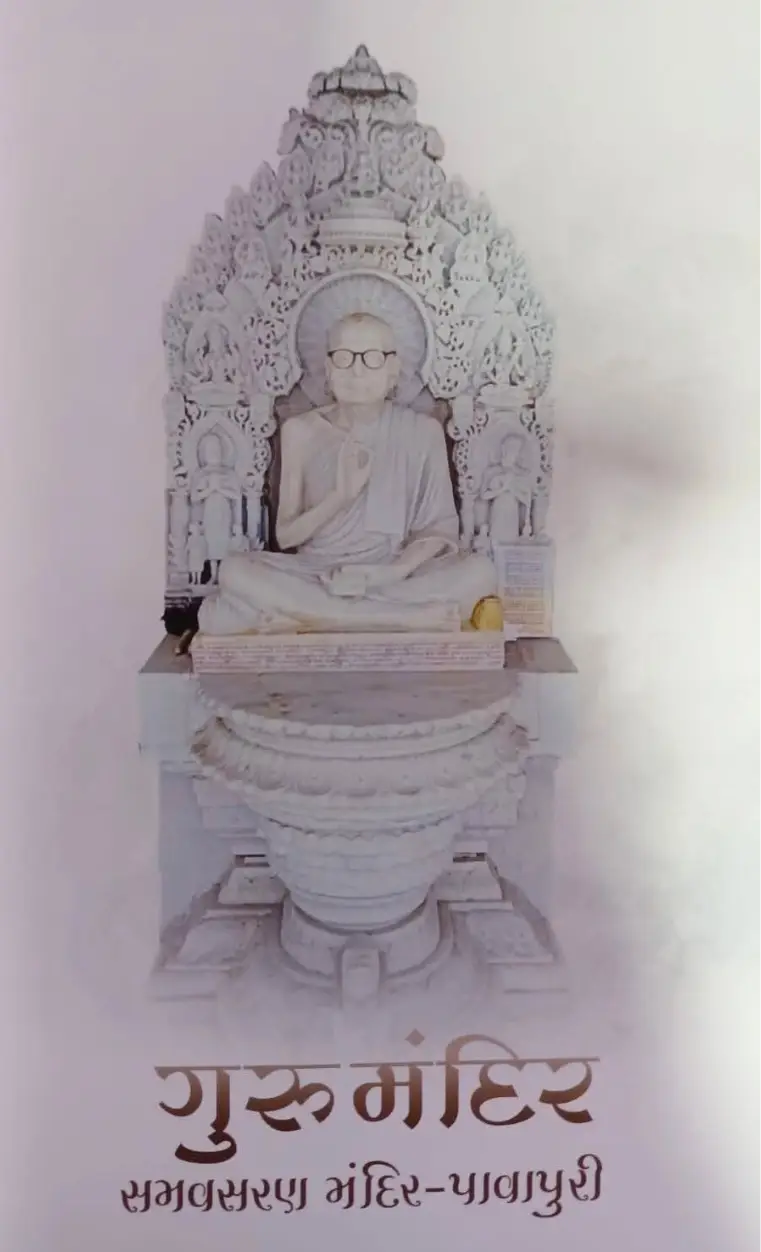
Located in Pavapuri Bihar , Rajasthan, this temple replicates the divine Samvasaran of Lord Mahavira. Though completed after Gurudev’s passing, it was envisioned and spiritually guided by him. The circular design symbolizes inclusiveness and harmony, housing a central idol of Mahavira surrounded by cosmic listeners—capturing the essence of Gurudev’s expansive vision.
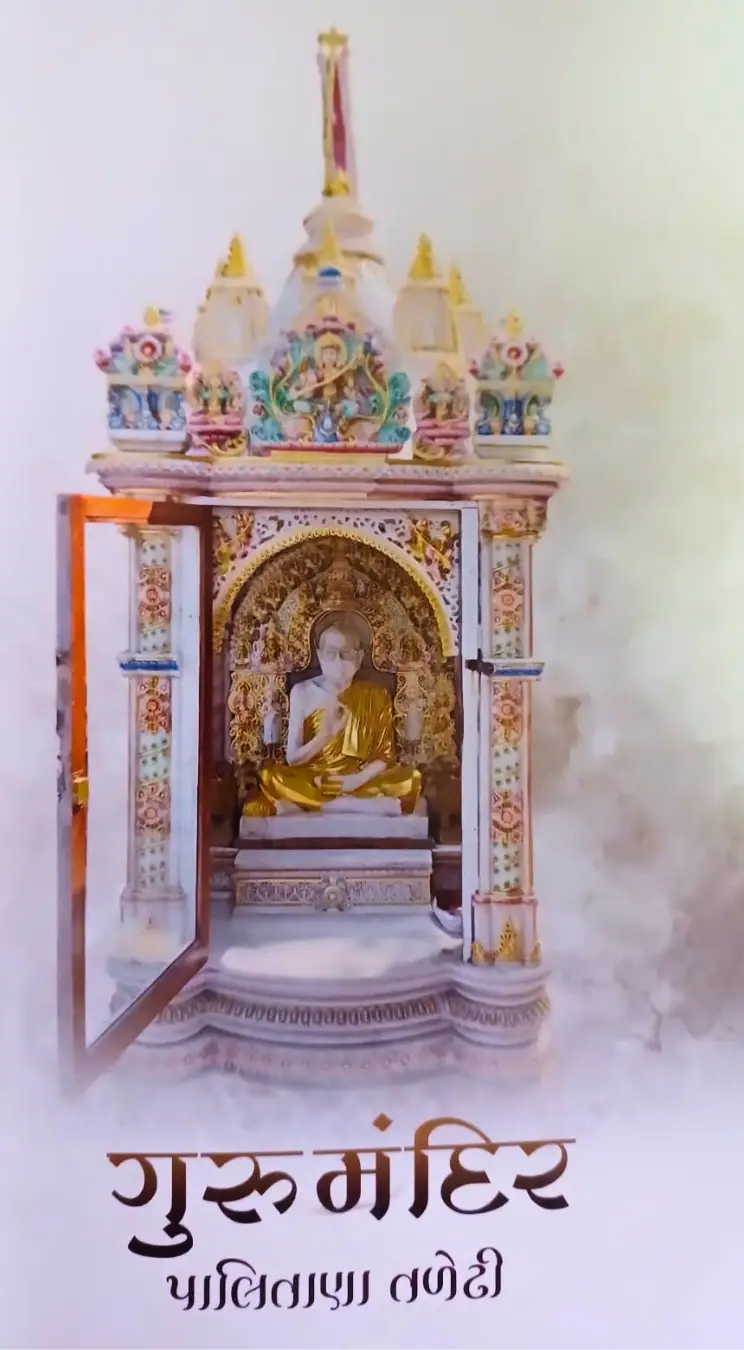
Located at the foothills of Palitana, this temple dedicated to Bhagwan Dharmnath was consecrated by Gurudev. It offers darshan to those unable to climb and serves as a spiritual starting point for pilgrims. With Gurudev’s blessings enshrined in its foundation, it remains a vital part of the Shatrunjaya pilgrimage experience.
Abu Tirth – Dilwara Temples Reanointed (Jain Mandir)
Restoring the Living Sanctity
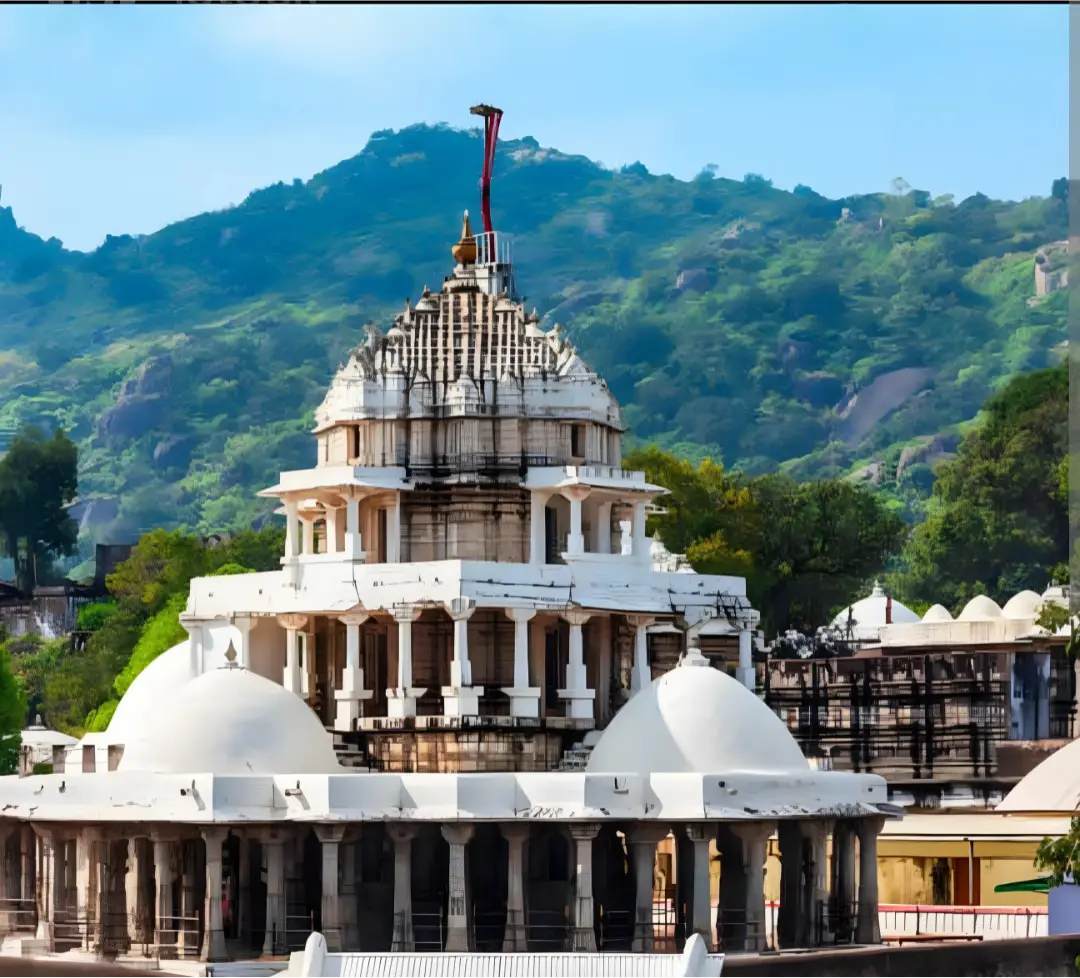
Mount Abu’s Dilwara Temples, known for their unmatched marble artistry and carvings, were ritually revitalized under Gurudev’s guidance. His reinstallation of moolnayak idols reaffirmed the sacredness of these ancient shrines. Today, visitors not only admire the architecture but feel the vibrant spiritual legacy Gurudev preserved through reverent restoration.
Temple Pratishtha by Gurudev: Acharya Shrimad Vijay Ramchandrasurishvarji Maharaj
Shri bhiladiya tirth
A Gateway to the Shatrunjaya Ascent
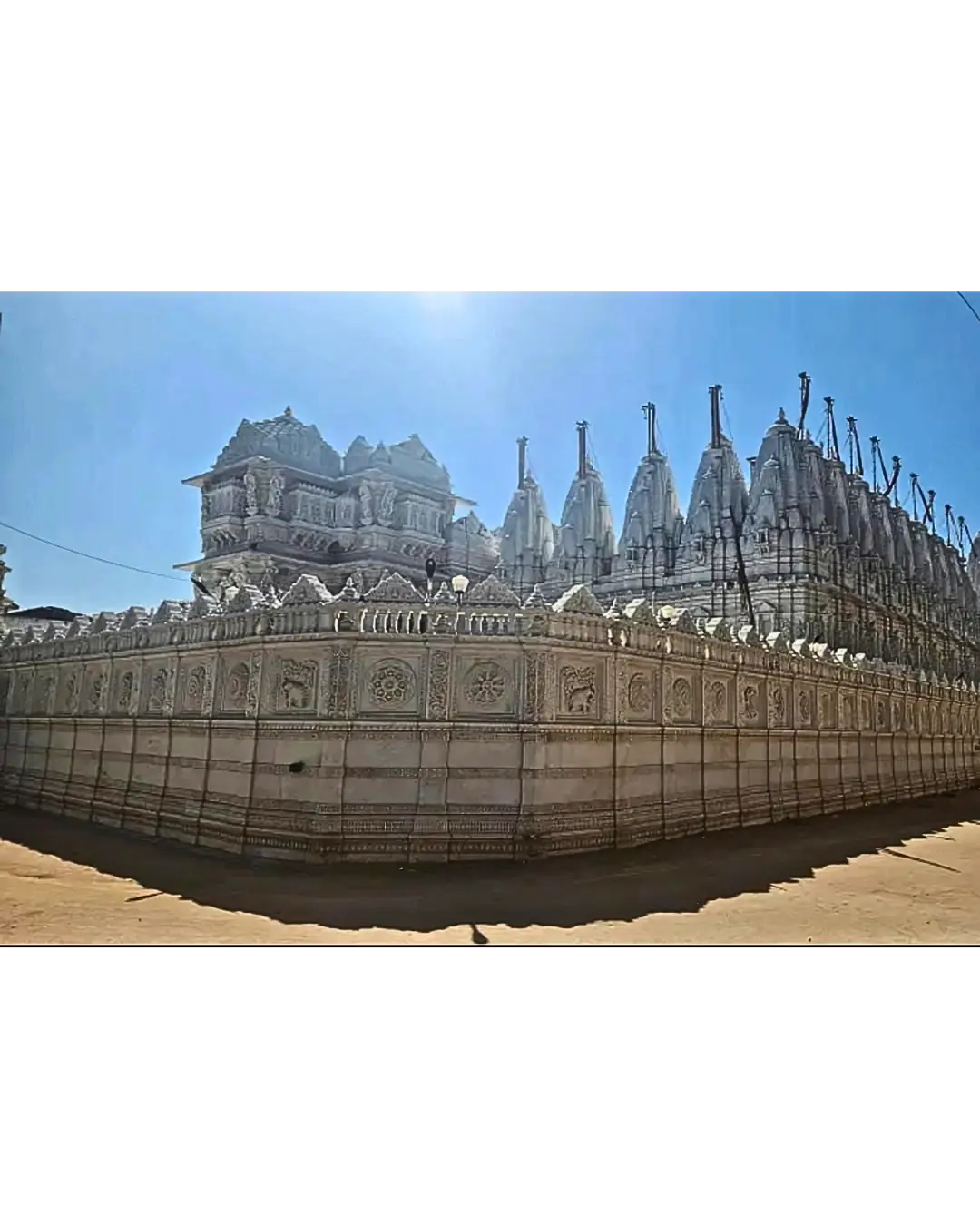
Once the ancient city of Trambavati, Shri Bhiladiya Parshwanath Tirth in Banaskantha was revived in 1928 and saw major reconstruction in 1980s. Under the guidance of Acharya Shri Ramchandrasuriji Maharaj, the grand temple complex—with 52 subsidiary shrines—was ceremoniously consecrated on 1980s Today, it stands as a shining beacon of Jain devotion, history, and architectural grace.
Hastgiri Tirth near Palitana is steeped in Jain legend and was revived under the guidance of Gurudev in 1979. It’s believed that Bharat Chakravarti Mustisen muni and 700 elephant attained moksha here. With breathtaking views and ancient roots, this marble temple today is a peaceful retreat where Gurudev’s spiritual energy still resonates.
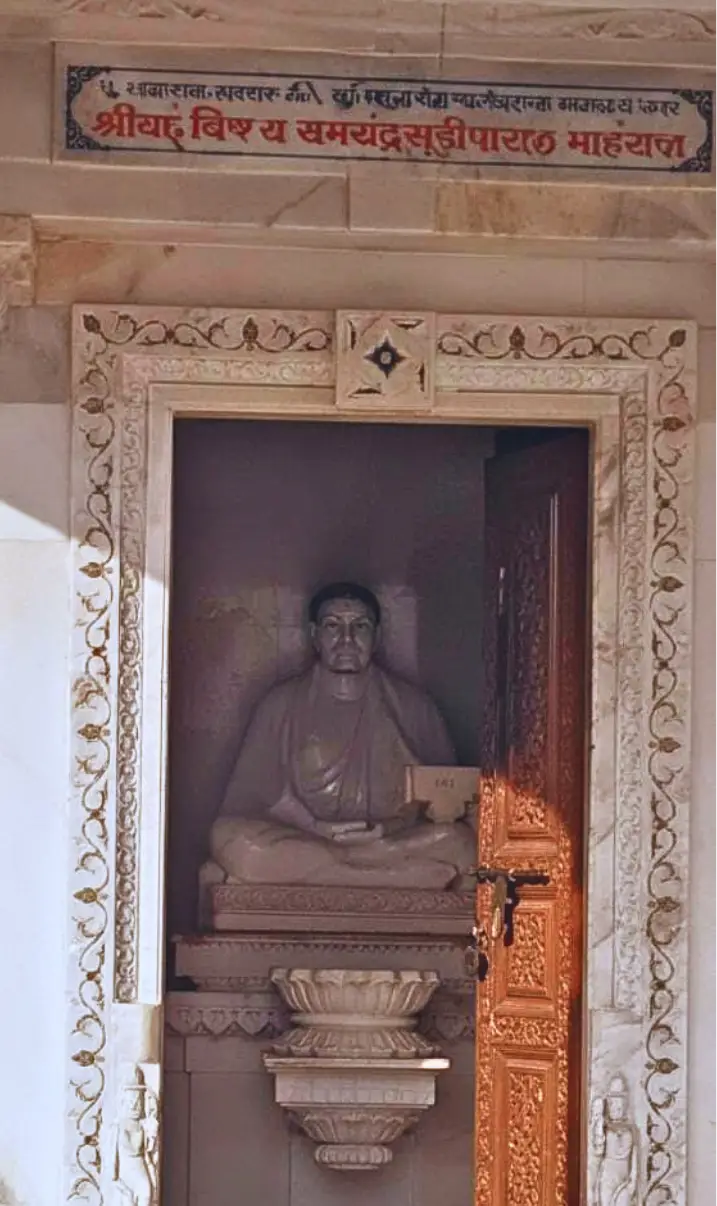
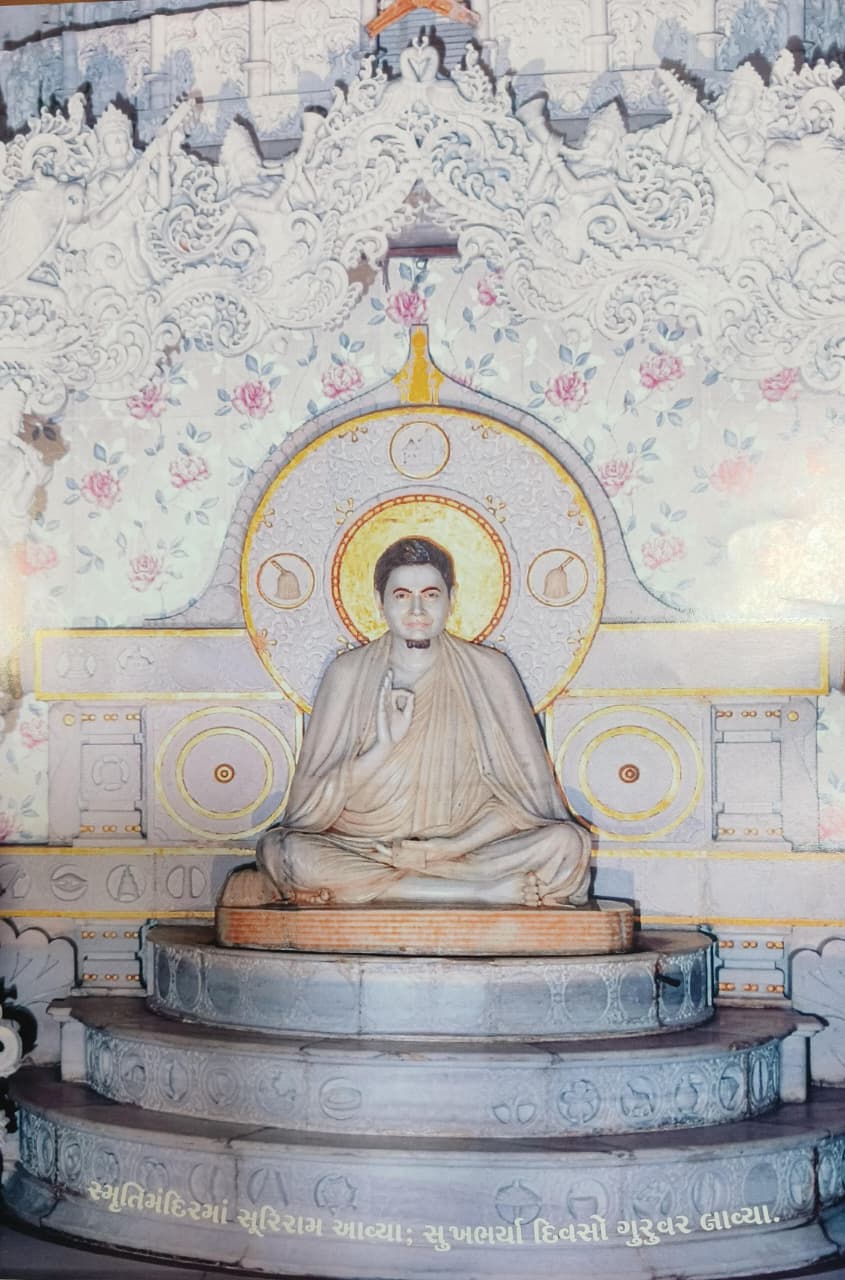
Situated in Sabarmati, Ahmedabad, Smruti Mandir is the final resting place and memorial temple of Gurudev. Built where he attained samadhi in 1991, this four-story marble structure radiates peace and reverence. With his samadhi, relics, and idols enshrined here, devotees gather to feel his enduring presence and spiritual warmth. It stands as a timeless tribute to his life and legacy.